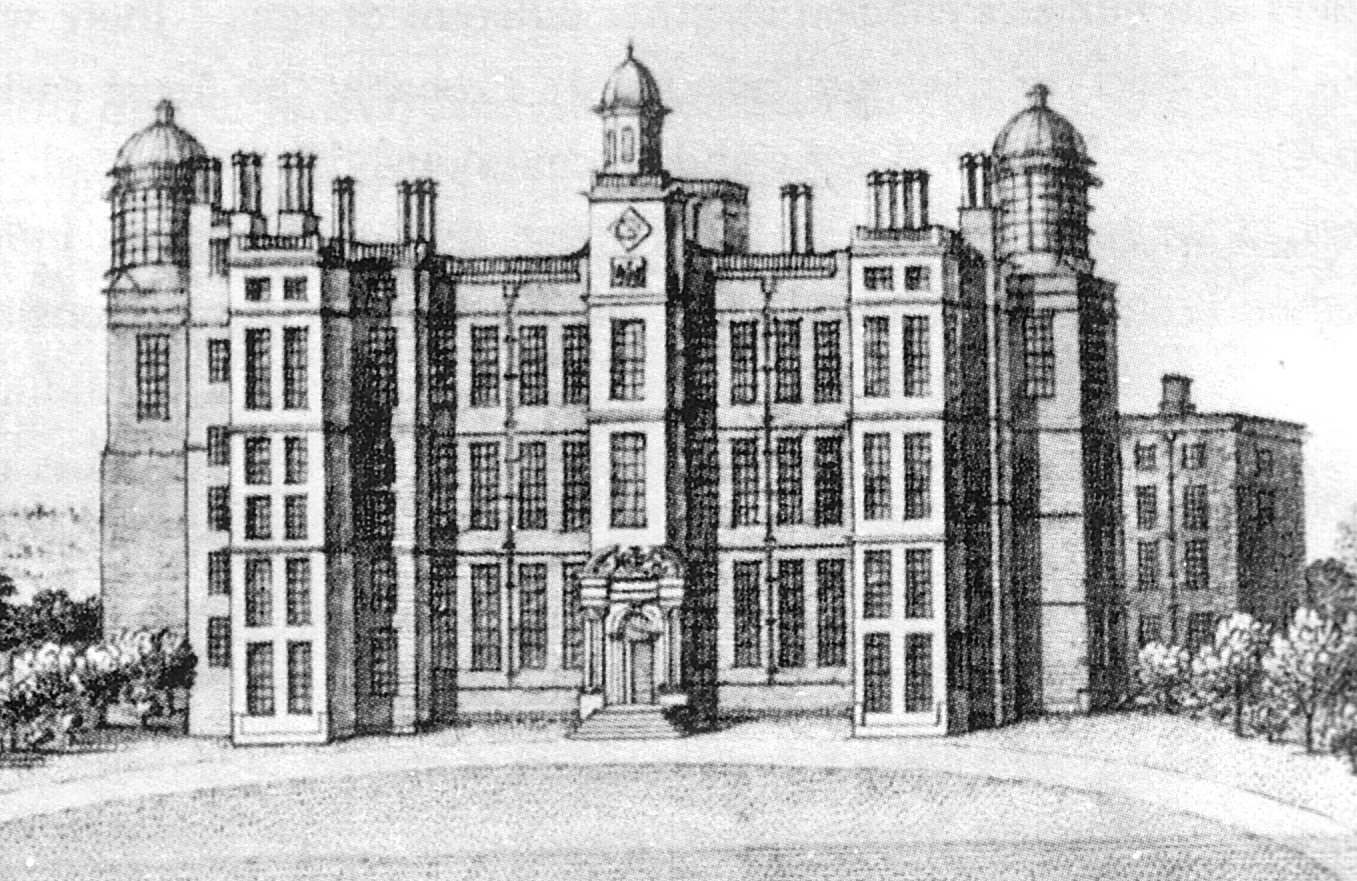
As Ben Jonson approached Belvoir castle from the east, he will have seen it from some distance, standing proud on its rock overlooking the Vale of Belvoir; in fact, pretty much the same effect as you get today as you drive along the A607. A ‘Pindaric Ode upon Belvoir Castle’ of 1679 thus describes,
Belvoir, Art’s master-piece, and Nature’s pride,
High in the regions of etherial air,
Above the troubled atmosphere…
See with what comely state
It unconcern’d o’erlooks the humble plains,
And, from its eminence, commands
The fruitful vale, and far out-stretched lands.
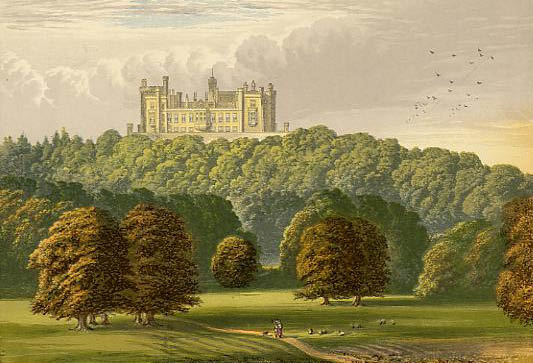
Belvoir in its nineteenth century incarnation, the castle Jonson stayed in having burnt down
And as Jonson climbed the 200 steps up the hill to the castle, he will have been able to look out over the Vale, to see the spires of Lincoln Cathedral on its own mound and those of the myriad of warm sandstone churches in between, a ‘most delicious and pleasing prospect, being accounted one of the best prospects in the land’. Leland described the Vale ‘barren of wood [but] very large and very plentiful of good corn and grasses’. The spires will have included that of Bottesford where still lie the ancestors of Jonson’s host that day, the earl of Rutland (more on this in the next blogpost).
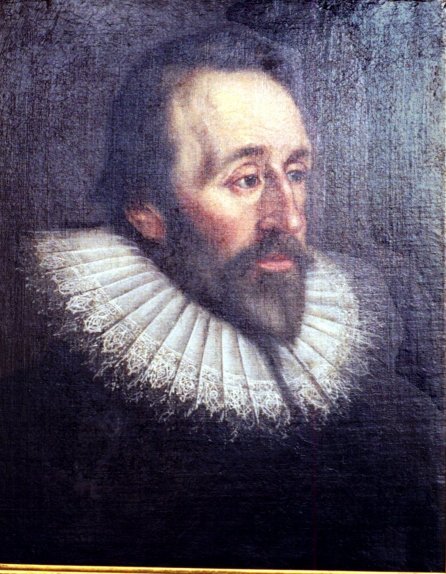
Francis Manners, 6th Earl of Rutland
Francis, 6th earl of Rutland, had inherited the title from his lively brother Roger in 1612. The family had close connections with the court, and the literary world: Roger’s wife had been Elizabeth, daughter of the famed Elizabethan poet, Sir Philip Sidney. She had been one of Jonson’s patrons, the addressee of several of his poems, and had also performed in court masques. Jonson described her to Drummond of Hawthornden as ‘nothing inferior to her father [Philip Sidney] in poesy’. Sadly for Jonson, she too died prematurely a fortnight after her husband in 1612. The new earl’s countess was Cicely Hungerford, a known recusant, and Francis had also embraced Catholicism, which added a frisson of danger to their household in a militantly Protestant period. But despite this Francis was a trusted advisor to the king. He was also a patron of the arts, commissioning an impresa from William Shakespeare and Richard Burbage in 1613 for that year’s accession day tilt, and took part in a couple of Jonson’s court masques.
Theirs was a busy and numerous household as befitted their noble status, and lofty surroundings. The Rutlands’ accounts portray a rich picture of generous hospitality, and varied entertainment, and a vivid example of what was expected of a noble establishment in Jacobean England. That summer, for instance, ‘one rundlet of muscadell’, a cask of 17 gallons of sweet white wine, was sent to Belvoir, so Jonson will have drunk well. Jonson meets Andrew Marks, a gentleman of the household, its music master, and lutenist, and Captain Stratford, a veteran of the Low Countries military campaigns, the earl’s general factotum. The Rutlands, like other nobles, had a private chaplain too, reputedly a Catholic, though they also had close ties to the very Protestant vicar of Bottesford whom Jonson was to meet a couple of days later.
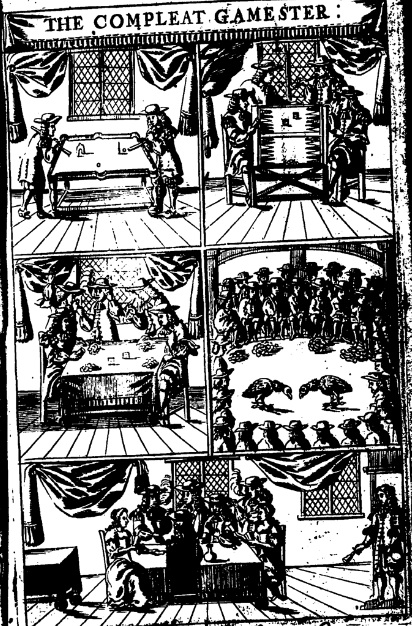
Charles Cotton, The Compleat Gamester, or, Instructions how to play at billiards, trucks, bowls, and chess, 1674
The earl spent a fortune on silverware and goldware for gifts and important occasions, hiring extra gilt bowls for royal visits, with neighbouring nobles lending hangings and furnishings for such occasions. Several payments were made for travelling musicians to play for the household, in addition to its own musicians. The Rutlands’ involvement at court necessitated appropriate clothing, in 1616 a goldsmith being paid £30 for 25 yards of silver velvet; 2 yards of crimson mantua velvet cost £10 a few years later. The countess had received a gold chain set with 138 small diamonds costing £251 in 1613, and the earl’s chains for Garter ceremonies had diamonds added to them. Francis Rutland liked to gamble too, while bowling ‘at the Greene’ with the king, or playing chess or ‘pennie pricke’, a betting game of throwing something at a coin as target, or gleek, a card game. In 1615, 20 shillings were delivered to the earl whilst playing pennyprick with Captain Stratford and other gentlemen in the Great Chamber at Garradon.
In temporary residence that July at Belvoir, was Robert Bertie, Lord Willoughby, Francis Rutland’s close friend, colleague in the drainage of Lincolnshire fens, and his regular hunting companion. This last was probably why Willoughby was there that week, for it was ‘venison season’ which according to Aubrey’s Brief Lives was the months of July and August, the traditional months too of King James’s summer progresses, as he hunted his way around the shires. Rutland’s accounts show he was a keen huntsman, of deer, foxes and hares, as well as enjoying hawking for pheasants, and he was also careful to preserve the hunting in his region for the king, in 1619 appointing gamekeepers to look after the game there ‘for the King’s sport’. Jonson was to see this earl hunting, as he was to see several other instances of this pastime, benefitting indeed from it in the sides of venison that he to receive…
Belvoir remains the home of the earls of Rutland, though much of the castle that Jonson will have stayed in has long disappeared, damaged in the Civil Wars and a nineteenth century fire. What’s more, the account is sadly silent on the nature and extent of his entertainment here – Jonson’s companion was ill, it seems, and not party to whatever transpired. In the light of the very full household records preserved in the Rutland manuscripts, we can conjecture: but in this instance, the ‘Foot Voyage’ itself doesn’t fill in the blanks.