Bolsover Castle: a ‘Delicate Little House’

Sir William Cavendish was very keen to show his celebrated guest his other pride and joy, the little castle that he was finishing on the heights of Bolsover.  As you drive today up the M1 (and as you will flash by it on the new high speed rail, if that ever gets built), you can see it commanding the landscape from its rocky plateau.  From this vantage point Jonson and his companion will have had an eagle’s eye view of Welbeck and Worksop, and been able to track their onward route north to Hodsock Priory and then to Bawtry. Our account notes that Bolsover was known as ‘Bozer’ – a local pronunciation that is still current today.
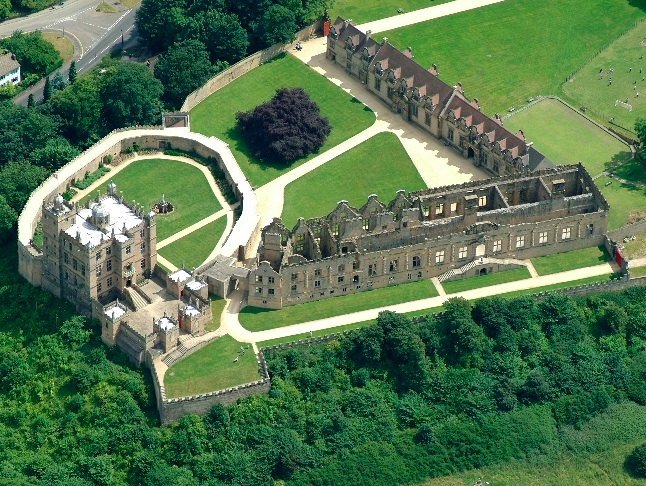
Bolsover aerial view

Bolsover Castle, thanks to English Heritage @EnglishHeritage

Bolsover had previously been owned by the earl and countess of Shrewsbury, and was one of their several properties that Sir William’s father, the canny Sir Charles Cavendish, under the guise of friendship had been able to divert his way.  Sir Charles had begun the new castle, ‘a delicate little house’, a gothic fantasy that Sir William saw to completion, with its extravagant and somewhat risqué wall and ceiling paintings, in which you can still lose yourself today.
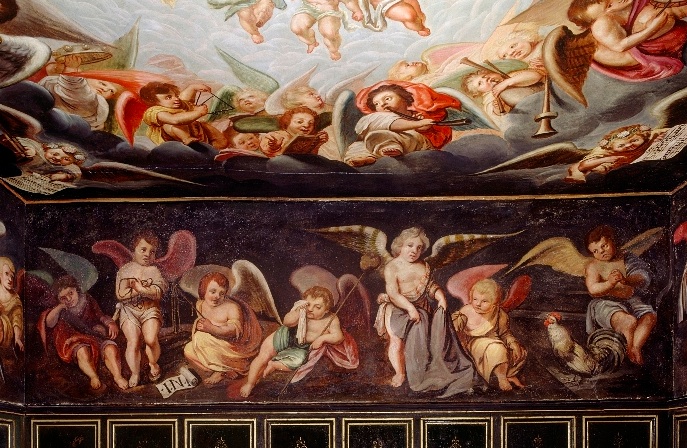
Bolsover’s ‘Heaven Room’, @EnglishHeritage

In this fabulous work, the Cavendishes employed the talented mason and architect John Smithson, son of Robert, the creator of Hardwick Hall, the masterpiece home of Elizabeth, Countess of Shrewsbury (aka ‘Bess of Hardwick‘, and Sir Charles’s mother), just up the road from Bolsover. But Sir William’s ambitions far exceeded those of his father, and he went on to build the magnificent and more classical range that dominates the skyline at Bolsover. This was the work he was probably discussing with Smythson when Jonson visited.

The Cavendishes’ accumulation and embellishment of their various estates was subsequently celebrated by the family friend, poet and doctor Richard Andrews:

Hardwicke for hugeness, Worsope for Light,
Welbecke for use, and Bolser for sight,
Worsope for walks, Hardwick for Hall,
Welbecke for brew-house, Bolser for all …
Hardwicke is rich, Welbecke is fine,
Worsope is statelie, Bolser divine.

Most remarkable about Jonson’s sojourn with the Cavendishes is perhaps the body of work that resulted. Whilst at Bolsover, he spoke with Smithson about the creation of a splendid tomb for Sir Charles, that still ornaments the church down the hill at Bolsover, alongside that of his wife Catherine.

Charles Cavendish was a Man whome…
Nobilitie, Bountie, Justice, made Honourable,
Counsell, Ayde, Secrecie, made a Trusty Friend,
Love, Trust, Constancie, made a Kind Husband,
Affection, Advice, Care, made a Loving Father,
Friends, Wife, Sonnes, made Content,
Wisdom, Honour, Content, made Happy.

It’s entirely plausible that this commission was the main purpose, or perhaps excuse, for Jonson’s visit to Welbeck in 1618. It’s even possible that Cavendish’s desire to bring Smithson and Jonson together at Bolsover was the initial impetus for a journey that grew wildly in the planning until it became the walk as finally undertaken that summer. From this perspective, Jonson’s visit to Belvoir and his inspection of the Bottesford tombs looks less like tourism and more like research – the Manners family had built a fittingly grand mausoleum in their parish church, and now Jonson was going to help Sir William Cavendish establish something similar at Bolsover.

Whatever the truth of it, this was the documented beginning of a relationship between poet and patron that would endure until Jonson’s death. Cavendish’s situation and concerns shaped Jonson’s work, and the writer’s style and values shaped his patron’s own intellectual life.

Little Castle, Bolsover

The Little Castle, Bolsover

A couple of years later, Jonson created an entertainment to mark the christening of Sir William’s son. He subsequently penned an epitaph for his hostess, Lady Catherine, Sir William’s mother, a manuscript version of which – now in the British Library – is once again accompanied by Smithson’s designs for a monument, winged cherubs framing Jonson’s words.

Jonson’s most important works for the Cavendishes, however, came in the 1630s. During Charles I’s progress to Scotland in 1633 for his belated coronation, he stopped at Welbeck, where a costly feast was laid out, and accompanied with a masque by Jonson known as The King’s Entertainment at Welbeck.  So delighted by this was the king that in 1634, Bolsover and the Cavendishes were granted the honour (and had to incur the expense) of entertaining both Charles and his queen, Henrietta Maria.  Naturally Cavendish, now the earl of Newcastle, turned again to his trusted literary friend to write an appropriately splendid entertainment, Love’s Welcome at Bolsover, using various parts of the whole complex at Bolsover as his moving stage. Newcastle was desperate to use this occasion to impress his royal master with his suitability for high office at court.  As his second wife, Margaret Cavendish, was to recall, he spared

nothing that might add splendor to that Feast, which both Their Majesties were pleased to honour with their Presence: Ben Johnson he employed in fitting such Scenes and Speeches as he could best devise; and sent for all the Gentry of the Country to come and wait on their Majesties; and in short, did all that ever he could imagine, to render it Great, and worthy Their Royal Acceptance.  This Entertainment he made at Bolsover-Castle in Derbyshire, and resigned Welbeck for Their Majesties Lodging; it cost him in all between Fourteen and Fifteen thousand pounds.

Newcastle’s objectives at court were not immediately fruitful, the eroticism of Bolsover’s painted panels, and their echoes in the masque in the figures of two Cupids, Eros and Anteros, apparently not to the taste of this more prudish king.  Ultimately, however, Newcastle was to become Governor to the young Prince Charles, remaining a royal favourite through the vicissitudes of the Civil Wars, and regaining his estates and a dukedom on Charles II’s restoration in 1660.

The day after his visit to Bolsover, Jonson was to admire his host’s horsemanship, perhaps Cavendish’s chief passion. English Heritage is celebrating this legacy by staging displays of expert dressage by riders in seventeenth century costume at Bolsover every weekend from now until September. You can also wallow in the world of Bolsover and Welbeck in Lucy Worsley’s extensively researched and eminently readable book, Cavalier.

And if you would like some local tourist information, try here.
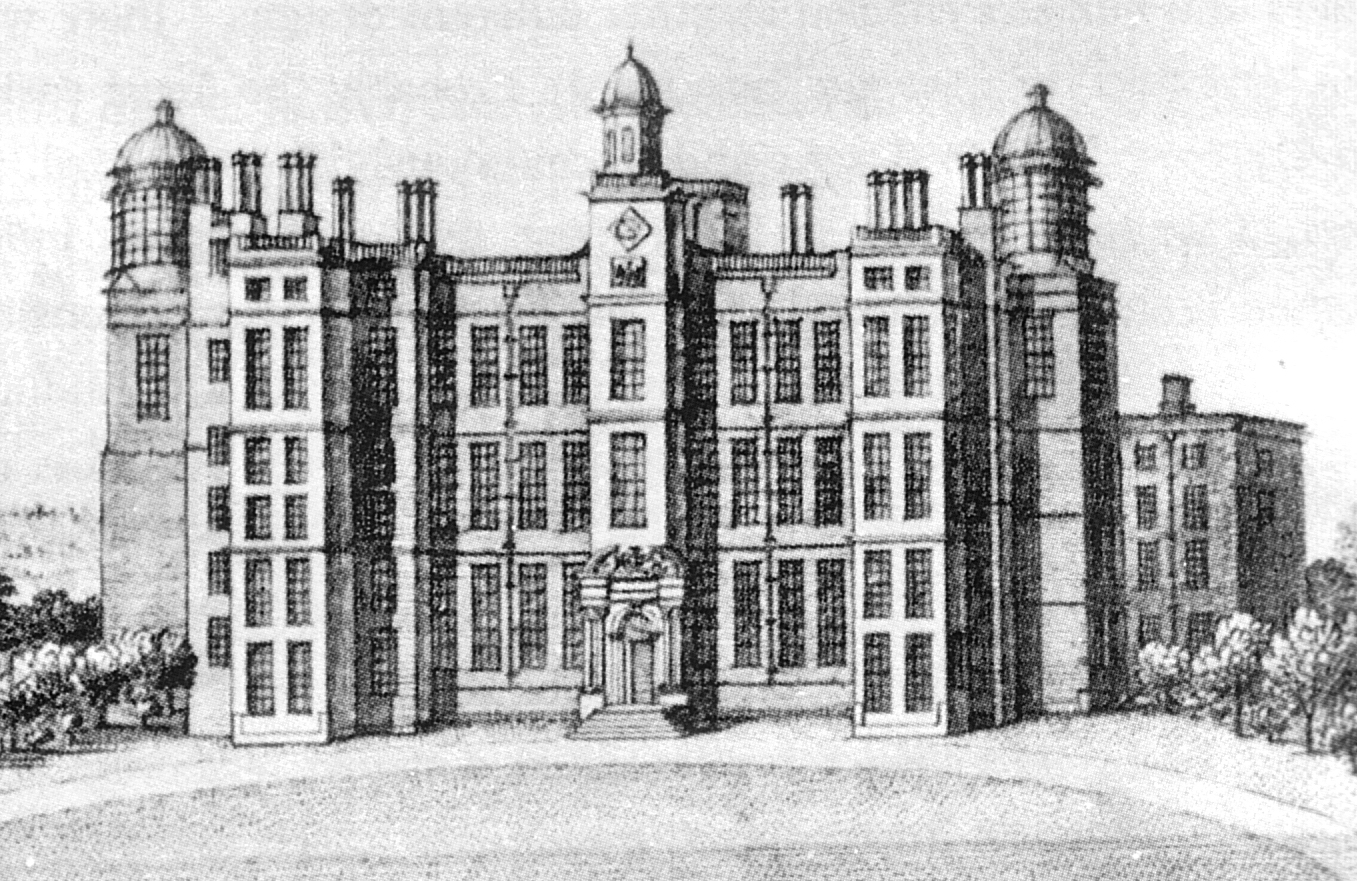
Worksop Manor: Falling Floors and Ghostly Paces

One of the fun things about the ‘Foot Voyage’ account is its capacity to illuminate rather more than the life and progress of its central character. In recording Jonson’s pilgrimage through Jacobean Britain, the companion has accidentally – or perhaps incidentally – captured details about the people and places encountered on the way that aren’t known to us from other sources. And despite his anonymity, he’s also revealed some information about himself that you wouldn’t necessarily expect to get from a 400 year old written record.

Worksop Manor

Worksop Manor

We can see this clearly in what the account has to say about Jonson’s visit to Worksop Manor on August 2 1618. The house they were going to see stood a mile to the west of the town of Worksop itself, and was a well known architectural landmark. In the late 1570s or early 1580s George Talbot, sixth earl of Shrewsbury and husband to ‘Bess of Hardwick’, instigated an extensive remodelling and enlargement of an existing hunting lodge on the site, under the direction and to the designs of the famous Elizabethan architect Robert Smythson. The resulting building was strikingly tall and extensively glazed, a ‘lantern and skyscraper of a house’, as Mark Girouard has put it; its gallery was particularly famous throughout England for its size and its position on the second floor of the building. But this incarnation of the Manor doesn’t survive: it burned down in 1761, after having undergone extensive rebuilding and renovation.

Our knowledge of Smythson’s Worksop Manor therefore derives from some surviving architectural drawings, engravings of questionable accuracy, and what can be gleaned from records of royal visits and relevant estate accounts. To these we can now add the ‘Foot Voyage’, since the house made a strong impression on the writer and his notes include some details which, to the best of my knowledge, haven’t been found elsewhere.

Here’s what he says:

We were first brought up to the great chamber, the floor whereof fell down when the king was there, a wonderful fair room; then to the king’s chamber, far beyond that, and after to the gallery, who for the bigness and beauty thereof exceedeth most that I have seen. It is fourscore and fifteen of my paces long. There are some eight large windows, in which are set the coats and arms of all the dukes, earls and barons of England. The house is as goodly as I have seen both for the height, situation and form of building. It stands in a park which is eight miles about, furnished with the tallest, straightest and largest oaks that ere I saw, and hath had in it at one time 1500 deer; eleven hundred died in the great snow.

The information the account gives us on the gallery windows – not their number, which we know from other sources, but their inclusion of noble coats of arms – would appear to be new. But this probably seems far less arresting than the suggestion that the floor of the great chamber fell down during a royal visit – probably King James’s stay at Worksop on his journey south in 1603, when he was entertained by Gilbert Talbot, seventh earl of Shrewsbury, and ceremonially welcomed to the house by a young William Cavendish. There doesn’t appear to be any other record of the king being caught up in an architectural calamity here, and one might expect something as serious as a falling floor to have been at least mentioned elsewhere. But here we too have to tread carefully: the account actually spells the word ‘flower’, which is an attested spelling for ‘floor’ in this period, but could of course mean something else – what, though, it is hard to say, as there doesn’t seem to be an architectural meaning for ‘flower’ that would make sense in the context. And if it does indeed mean ‘floor’, this may not have been quite the structural failure it would seem to be at first glance, because ‘floor’ could also mean ‘ceiling’ – so what we’re talking about here is most probably some dodgy plasterwork, rather than a major disaster. Embarrassing, perhaps, for Shrewsbury, and a bit of a nasty headache for both the household and anyone in the vicinity when it came down, but perhaps neither life- nor house-threatening.

Worksop Manor

Worksop Manor in the 18th century

And then there are the measurements. Given that the gallery at Worksop was famed for its size, it’s perhaps unsurprising that the writer chose to pace it out for himself. What I find rather winning about this – and I admit, this is a bit nerdy – is that we can actually compare this with the known length of the gallery, as recorded in a surviving plan. It was, in fact, 212 feet long. A quick calculation tells us, therefore, that the writer’s stride was about 27 inches, or 68.5 centimetres. So what? Well, it is possible to calculate someone’s height, at least roughly, from the length of their stride, and using a standard formula we can estimate that someone with a stride of that length was probably about 1.65m, or 5′ 5″, tall.

I like that. Among the traces that Jonson’s companion left us are his own paces, echoing down the gallery of a long-vanished country house. We may not be able to uncover his name, his age, his parentage or any of the usual details, but the ghostly figure we have to imagine at least has an approximate height.

A Week at Welbeck

Jonson’s visit to Welbeck Abbey, the home of Sir William Cavendish – later Earl, Marquis and Duke of Newcastle – was clearly one of the highlights of his journey north. It occupies more than 1,000 words in the ‘Foot Voyage’ account, a fair proportion of the total. What’s more, many of the account’s most colourful incidents and details are to be found here.

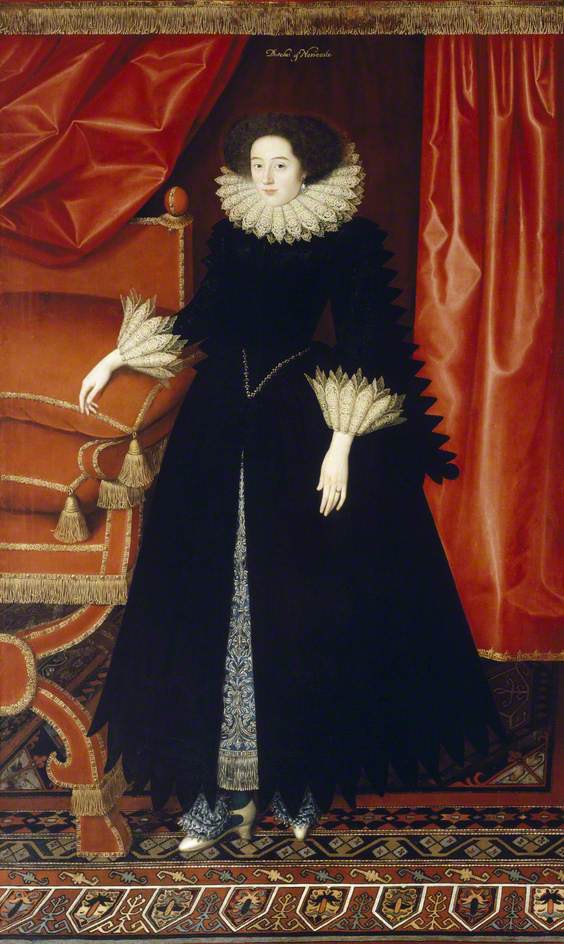
Elizabeth Bassett, Countess of Newcastle

Cavendish was on the rise – he’d come into his inheritance only the previous year, and he was keen to enhance his own, and his family’s, status. The account confirms that he’d recently married Elizabeth Bassett, an heiress of considerable means, though this alliance doesn’t seem to have been known about in London till later in the year. As we’ll see, he had a specific commission in mind when he invited Jonson into his home – one which was designed to endow this branch of the Cavendish family with some of the trappings of nobility.

Cavendish’s late father, Sir Charles, had done much to cultivate these ambitions, and to ensure that his son and heir was in a position to prosecute them effectively. So it’s no surprise to discover from the account that the first thing Sir William did was take bibliophile Ben and his companion up to his father’s library, ‘which besides the neatness and curiosity of the place, the books were many and of especial choice‘. From there, the account says, they were taken to ‘his room of evidences, in handsomeness equal to the other with boxes all about it‘. A ‘room of evidences’ is a kind of muniments room, a secure and special place for storing proofs of property ownership – documents of entitlement, genealogy and inheritance, all the evidence for the dynastic family’s sense of its own importance. Here, though, in addition to boxes full of parchment, we find something else – specifically, ‘all the spoils Sir Charles had brought away from Sir John Stanhope‘.

These ‘spoils’ were weapons:

two pistols, a staff with two pikes in it, a rapier that reached to my nose, and a basket hilt sword as long as that, another sword with a great basket hilt dagger. And there was the cudgel which Sir Charles had bastinadoed Sir John with before, and upon it written ‘the staff that Sir John Stanhope was beaten with.’

The placing of these ‘spoils’ in Welbeck’s inner sanctum shows how a grisly 1599 fight between Sir William’s father and one of his rivals for place and power in the north midlands had already become part of Cavendish family mythology. It was a particularly vicious episode in a long-running feud between the Stanhopes and the family and allies of Gilbert Talbot, earl of Shrewsbury. Cavendish, having ridden out to inspect the work on a house he was then building at Kirkby-in-Ashfield, was ambushed by Sir John Stanhope and a posse of armed retainers; despite being outnumbered, and wounded, Sir Charles and his own servants overcame their attackers and administered a humiliating beating to Stanhope. Until now, our main source for the details of this nasty skirmish has been a letter of protest sent by Cavendish immediately afterwards to the authorities in London, and quoted by the gossipy letter writer John Chamberlain (an almost identical copy survives among the Portland papers at the University of Nottingham). The ‘Foot Voyage’ retells the story, and shows how it was becoming embellished as it passed into family legend:

[Sir John Stanhope] with thirteen well-appointed [men], armed with Pistols, swords, and staves, two of them being Fencers which had took the Sacrament to kill him [i.e. Sir Charles Cavendish], set upon him, having but Mr Harry Ogle, his Groom and Page in his company. Being first shot as he lighted of his horse through the groin and into the buttock, After which wound he slew those two that had sworn his death, and made himself master of their weapons, another left dead and all the rest hurt and put to flight.

It’s the new detail of these vengeful ‘fencers’ – professional swordsman – that does it: despite its difficult syntax, in this telling of the story the supporting characters are given colour and motivation, made over into more malign and determined opponents for Sir Charles to vanquish. In showing these spoils and telling their story, Sir William Cavendish was surely hoping to influence his guest’s impressions not only of Welbeck, but also of the aspirational family who lived there.

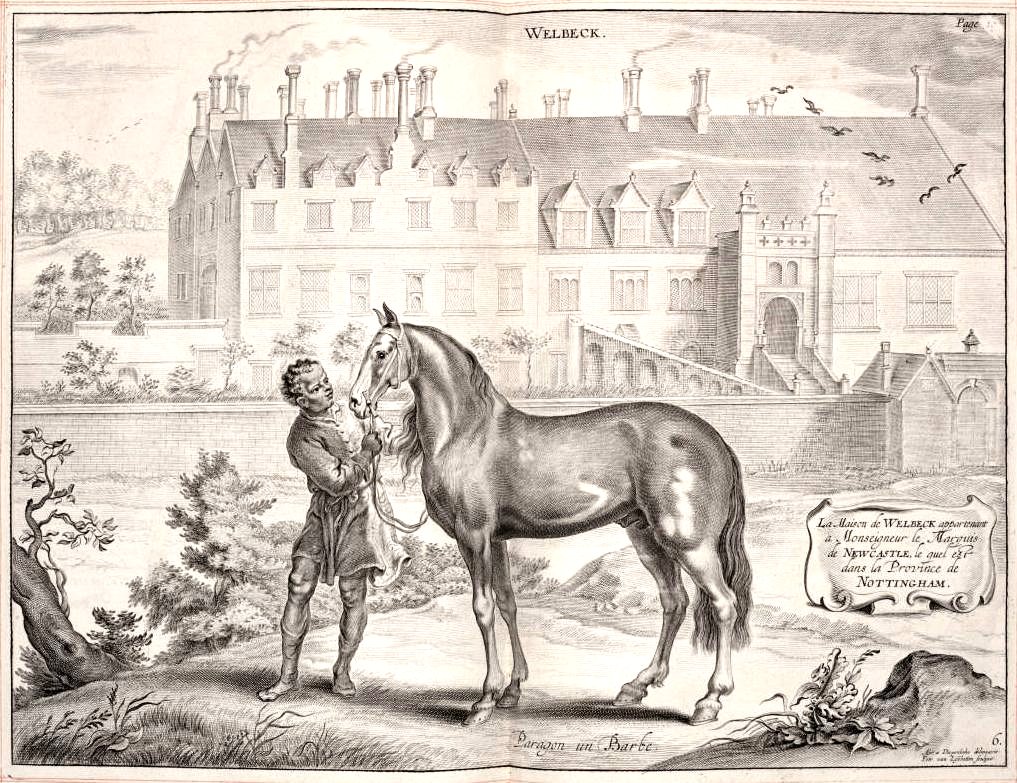
Welbeck Abbey in the seventeenth century

Welbeck Abbey in the seventeenth century

Rufford Abbey: a House’s Changing Character

When Jonson crossed the threshold of Rufford Abbey, he was entering into the complicated world of no fewer than two countesses of Shrewsbury and the Welbeck Cavendishes (of whom more to come soon). His connection with this extended family and their households was to be a substantial help to him as he travelled through Nottinghamshire, the West Riding of Yorkshire, and Northumberland.

Rufford Abbey, image thanks to English Heritage @EnglishHeritage

Rufford was a former Cistercian monastery, a substantial estate lying just within the north-eastern boundary of Sherwood Forest. It was a place renowned as a hotbed of recusancy – that is, lingering Catholicism. Its occupants until 1616 had been Gilbert and Mary Talbot, the 7th earl and countess of Shrewsbury. Gilbert had come to a relatively unhappy end for an earl, dying impoverished in 1616, and Lady Mary (a Cavendish by birth) in July 1618 was languishing in the Tower of London for the second time, for her refusal to divulge what she knew of her cousin Lady Arabella Stewart’s marriage and alleged pregnancy. She was eventually fined £20,000 for her obdurate silence. On the occasion of her first imprisonment in 1611, the rival local magnate Sir John Holles was sent to search Rufford, and he penned his disapproval of the trappings of catholicism that he found hidden, the ‘books, beads, crosses and pictures’ in the granges behind the abbey:

the house, a confused labyrinth, underneath all vaults; above, entries, closets, oratories, many stairs down and up, trap doors to issue forth and trap doors to lead into garrets, so as in my search I was never so puzzled in my life’… ‘trapdoors to conceal and issue forth such pernicious vermin as I sought for … I heard presently, these fellows [hidden papists] dislodged and all stuff that was either of weight or superstition conveyed away by coach and cart.

Rufford, he said, backed onto

a great woodland country fraught with many scattered granges and all of these inhabited with obstinate recusants, fled to that asylum from Derbyshire, Yorkshire, Lincolnshire etc, as in a covert, by many back and trap doors, so as, if the forest way may be called via regia, this woodland way is really via pontificia, and altogether environed with the Countess’s dependency.

Gilbert_Talbot_7th_Earl_of_Shrewsbury_1596_2

Gilbert Talbot, 7th Earl of Shrewbury, in 1596

When Gilbert Talbot died, Mary Talbot’s replacement as countess was Jane, wife of Edward Talbot, the 8th earl of Shrewsbury, who had only lived for two years to enjoy his powerful title. As the eldest daughter and heiress of Cuthbert, 7th Baron Ogle of Northumberland, Jane was not as financially embarrassed as her predecessor. She was also the sister of Lady Katherine Cavendish, the recent widow of Sir Charles Cavendish who had so ably diverted much of Gilbert Talbot, the 7th earl’s possessions in his own direction. (Are you keeping up?) So they were a very interwoven bunch, the Shrewsbury estate being keenly contested by the husbands of Gilbert’s daughters, against Jane’s nephew, Sir William Cavendish of Welbeck, executor and beneficiary of Gilbert’s will. In 1618, in a separate case, Jane’s very ownership of Rufford was being contested by another impoverished Talbot lady, Grace, and it eventually descended after Jane’s death to the Savile family of Yorkshire.

In the meantime, and despite all the legal wrangling, Jane Shrewsbury ran the household at Rufford. She was not suspected of recusancy, and in her time the Abbey was known not for religious subterfuge or conspiracy but, instead, for its free hospitality. The poet and doctor Richard Andrews, a connection of the Cavendish family, praised her generous provision of ‘Almes’ in a poem of the 1620s, and the (very) minor writer William Sampson echoed this praise of the charity and hospitality, ‘which she at Rufford every day did show’. Jonson, a beneficiary of some of this liberal entertainment, was himself to write an epitaph for Jane (Underwood, 28) on her death in 1625:

A noble Countesse, grave,
In blood, in birth, by match, and by her seate;
Religious, wise, chast, loving, gratious, good,
And number Attributes vnto a flood.

She was interred in an impressive tomb in Westminster Abbey alongside her husband.

Rufford and its park also provided good hunting, Jonson being taken to hunt for gamebirds, and the countess frequently entertained King James on his hunting expeditions. One such was described by Sir Thomas Wentworth, later earl of Strafford in 1624…

I write you news from the Court at Rufford, when the loss of a stag and the hounds hunting foxes instead of deer put the king into a marvelous chafe … In the height whereof comes a clown galloping in, & staring full in his face: his blood (quoth he), Am I come forty miles to see a fellow? And presently in a great rage turns about his horse, and away he goes faster then he came. The oddness whereof caused his Majesty and all the company to burst out into a vehement laughter, and so the same for that time was happily dispersed.

You can visit Rufford today, now under the stewardship of English Heritage and Nottinghamshire County Council. From its walls and walks you can perhaps still get a sense of these contrasting moments in its history, and the personalities of the inhabitants who gave it its life.

The Buzz of a Big Town

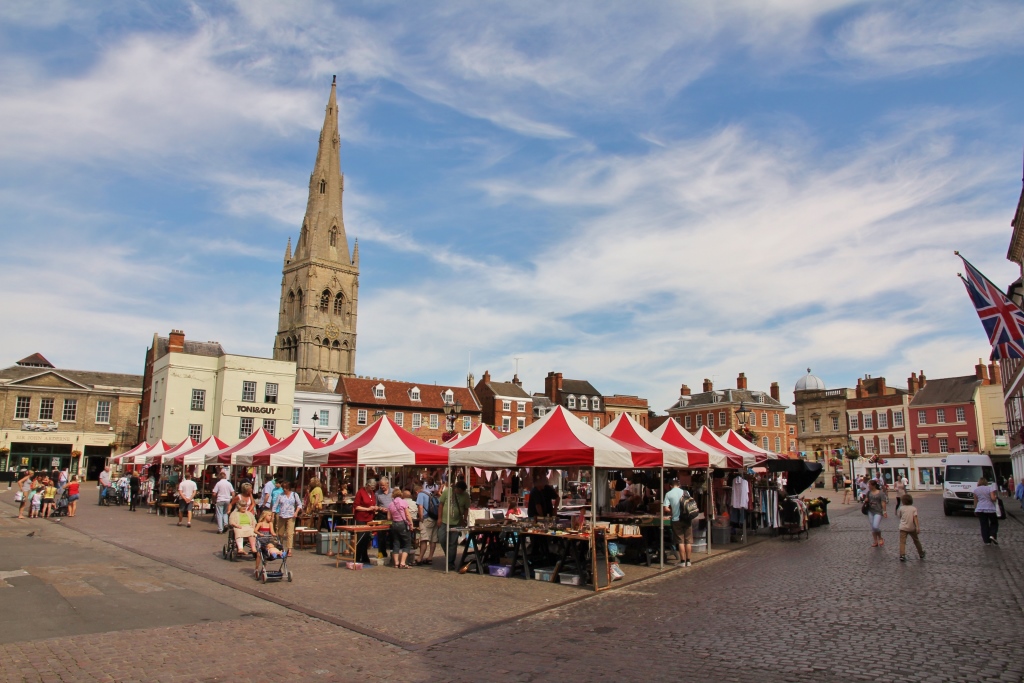
The travellers’ arrival at Newark is one of those points in the walk where we see plans giving way to events. ‘We had purposed to lie at Mr Atkinson’s, the postmaster’s‘, it says, ‘but Wombwell of the Hart subtly anticipated us‘. Newark was a busy place, wrote an observer in 1609, ‘a great thoroughfare town and a post town, and the Kinges Majesties subjects doe usually travell from the north parts into the south parts through the said town, and lykewyse back again‘.

Newark, Market square

Market square, Newark

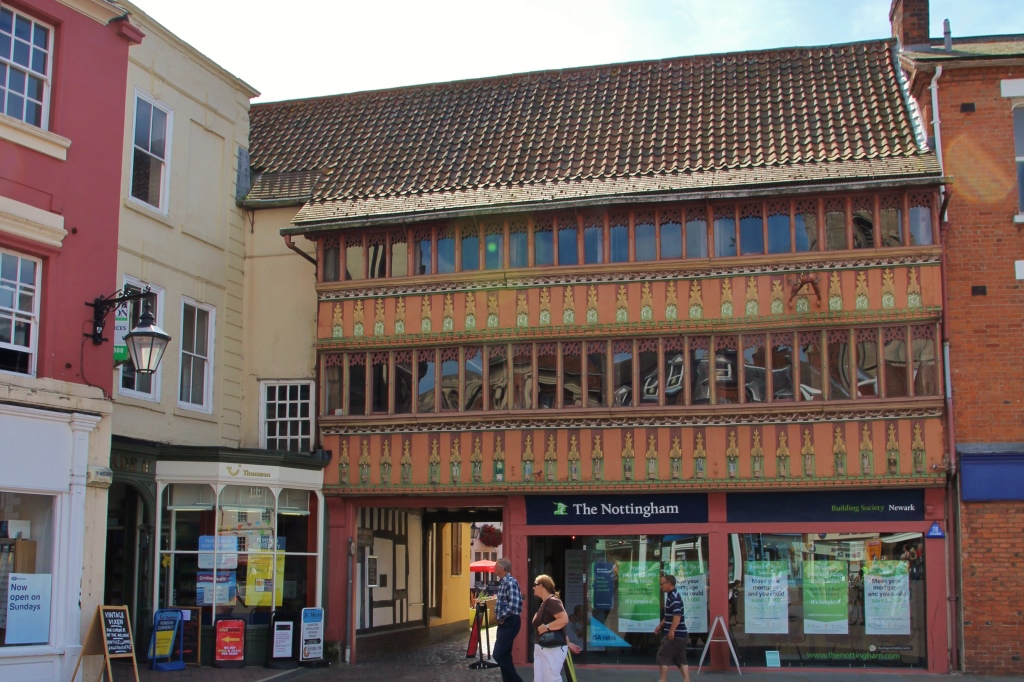
It seems that two of its most prominent hosts were vying with each other for the privilege of accommodating this important visitor. William Wombwell’s trump card here may well have been the White Hart itself, one of the grandest and oldest inns in Newark, which was located in the south west corner of the market square and distinguished by its ornately decorated fifteenth century front range. Miraculously, much of this part of the building survives to this day, and it is now a branch of the Nottingham Building Society. Inside, you can still see seventeenth century wall decorations similar, if not identical, to those which would have greeted Jonson when he arrived here.

Newark, old White Hart inn 2

Front range, Old White Hart inn, Newark

Comfortably parked in this corner of Newark’s bustling market square, Jonson and his companion took the opportunity to relax and let the world come to them. Scots courtiers – regular users, now, of this north road – passed through. John Twentyman of the Saracen’s Head – a rival inn almost next door to the White Hart – gave them ‘good sport‘. Local gentry families entertained them. The vicar, Edmund Mason, was a member of such a family, and also a man with ample court and literary connections. He had counted the actor and playwright Nathan Field and the poet Francis Beaumont among his associates; in 1615, he played several parts in the performance of George Ruggle’s neo-Latin satire Ignoramus before the king and Prince Charles at Cambridge. Indeed, Mason was tutor to the prince, probably prior to his appointment at Ordsall in 1614, and from at least 1621 a chaplain-in-ordinary at court: his Sermon Preached at Oatlands was published in 1622 by royal command. His fellow royal chaplain, the poet and later bishop Richard Corbet, celebrates Mason as ‘a man whose Tongue and Life is eloquent’ in his lengthy travel poem Iter Boreale [‘A Northern Journey’], written in the early 1620s.

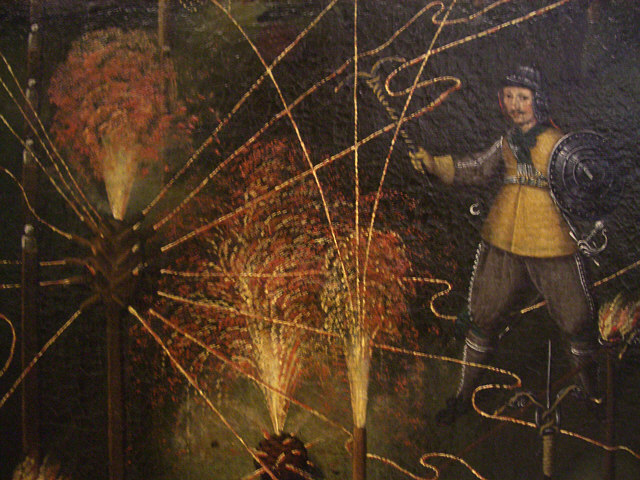
So the conversation at Newark was undoubtedly good – good enough, perhaps, to explain a stay of four days in this lively place. But there were other diversions: ‘here were fireworks and bull baiting‘, the account says. Newark had a castle and a garrison, so perhaps the pyrotechnics originated there. And the market square features, even now, a bear or bull baiting post, though it isn’t of seventeenth century vintage and probably also isn’t in the original location. Given that the travellers stayed from Friday till Tuesday, it’s possible that ‘the Lord’s holy sabbath‘ was ‘profaned‘ with these and like recreations – ‘Beare and Bull baiting, … dicing and carding, … May games and morrice dance‘, as the more godly complained. If it was, then it’s hard to imagine Jonson being too fussed about it.

Furttenbach_Feuerwerk

The Bottesford Tombs

If you look north from Belvoir Castle, down into the valley towards Newark, one of the most prominent landmarks in front of you is the spire of St Mary’s church, Bottesford. This was the next destination for Jonson and his companion, and another good welcome awaited them:

From thence we were brought by Captain Stratford, Mr Marks and another gentleman of My Lord’s to Bottesford, three miles off Belvoir, where lie all the Earls of Rutland entombed. But by the way, the Earl, my Lord Willoughby, and Sir Robert Willoughby being a hunting and spying us on our journey, galloped over to us, and the Earl bid God send us well on our pilgrimage. At Bottesford, a grave and reverent man called Doctor Fleming gave us great entertainment. And an honest parson Surcot, beneficed hard by, would not part from us till he had made us taste of all the ale thereabouts, and not contented so waylaid us at the town’s end with a pail full of ale, which when he had emptied, we made low curtsey to his red nose, and parted, etc.

Of course, it’s the detail of the red-nosed parson Surcot (rector, it turns out of nearby Muston – hence, ‘hard by’) and his bucket of ale that leaps out at us here – but he, alas, has left little trace behind him. The rector of Bottesford made rather more of an impression on the collective memory – this reverend doctor was Samuel Fleming, formerly of King’s College Cambridge, and one time tutor to the writer Sir John Harington, who later recalled Fleming’s defence of ‘humane learning’, specifically the study and use of rhetoric, against the criticisms of ‘the precise sort [i.e., the self-styled godly, or Puritans], that would have the word and church and all goe naked’. He’d long been chaplain to the earls of Rutland, and also served as a Justice of the Peace. His brother Alexander had been heavily involved in the editing of the 1587 edition of Holinshed’s Chronicles, and had died in 1607 while visiting Bottesford; he is commemorated, still, by a small brass plaque in the church. Samuel Fleming was something of a patron to the village, responsible for the construction of a still-functioning bridge and the establishment, according to provisions made in his will, of a hospital for widows.

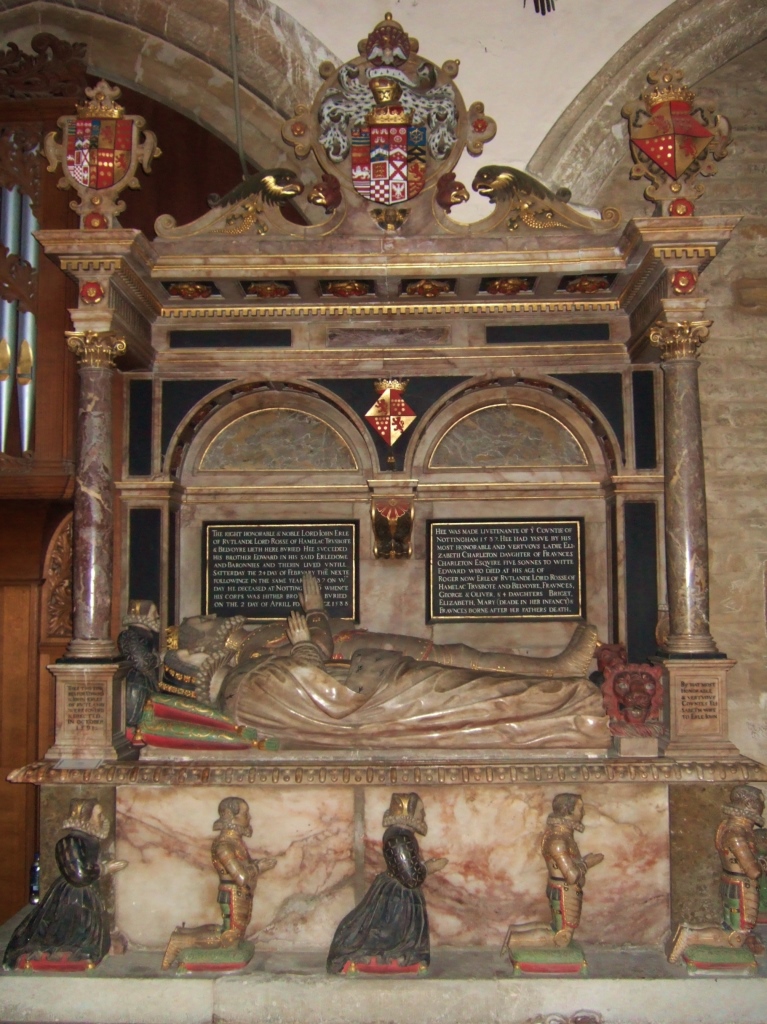
Monument to John Manners, 4th earl of Rutland

Monument to fourth earl and countess of Rutland

Jonson wasn’t here, though, just to see Dr Fleming, as the reference to the Rutland tombs makes clear. Since the 1540s, the Manners family of Belvoir had turned the chancel of St Mary the Virgin into their own mausoleum, crowding it with some wonderful funerary monuments. When Jonson visited, he’d have been able to admire the completed monuments to the first, second, third and fourth earls. More poignantly, he’d perhaps have been able to inspect the nearly completed work for the monument to Roger, fifth earl of Rutland, and his countess, Elizabeth Sidney, who had died within weeks of each other in 1612. She was the daughter of Sir Philip Sidney, patron of Jonson and the addressee of several of his poems. Speaking to Drummond, Jonson described her as ‘nothing inferior to her father … in poesy’.

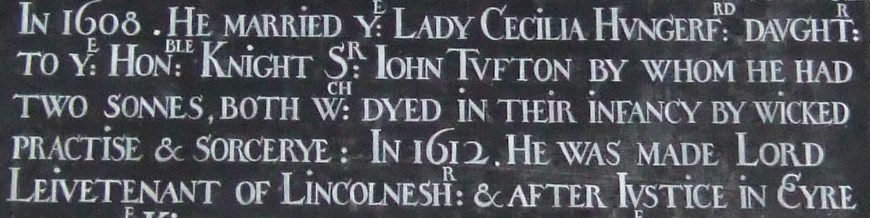
The party assembled by Samuel Fleming that July day might have discussed one highly topical issue – the case of the ‘Belvoir witches‘. In 1618, three local women who had formerly served the sixth earl of Rutland were accused of using witchcraft against his sons, both of whom had died young. The women were examined and tried at Lincoln in early 1619, with the earl, Lord Willoughby and Samuel Fleming playing an unhappy part in the proceedings. The eldest, Joan Flower, herself died during the case; her daughters Margaret and Phillip or Philippa were convicted and hanged. When the sixth earl’s monument was added to the choir at Bottesford in the 1630s, it included both visual and verbal reference to the case in lamenting the loss of his ‘two sonnes, both which dyed in their infancy by wicked practise & sorcerye‘.

Monument to Francis Manners, Bottesford - detail

Detail of inscription on the tomb of sixth earl of Rutland, Bottesford